


It did not start with a business plan.It started with lived experience.
Let me introduce myself — I am Slađana Trivić Stanić, founder and patient zero of Atika.
My grandmother always said I was a sickly little creature. I know, that is not the sentence you expect at the start of a serious business story, but it does not make her turn of phrase any less perfect. Health problems, eating disorders, depression and anxiety wove a vivid tangle of unresolved issues that the ten-minute doctor's appointment — the hallmark of our healthcare system — never managed to unpick.
So I began on my own. I researched how my depression affected my diet, how diet affected my thyroid, the thyroid my mood, and my mood my discipline. Everything was connected.
Twenty-something, with zero credibility
If you expected our medical story to begin here, it does not. In my early twenties, with empty pockets and an even emptier employment record, my credibility to influence the healthcare system was precisely nil. So I started with what was within reach: dance, fitness, movement. I opened a studio in Banja Luka and built a concept of training through play and themed challenges that got even the most hardened non-exercisers moving.
It turned out my lack of experience bothered the profession more than it bothered the members. Within a year we were the studio with the most members in the city.
The first online programme in the Balkans
The idea of turning that concept into an online programme came about by accident, in the spring of 2014, when the aunt of one of my members wrote to say how sorry she was that nothing similar existed in Athens. That same evening I recorded our class and sent it to her as a surprise. That would have been the end of it, had she not written ten days later to say she had lost two kilograms and to ask whether she could pay for more recordings. The pieces fell into place on their own. This was my chance to grow the business without going looking for an investor.
I spent days searching the internet for an example of an online programme. I never found one.
There were DVD workouts, software that linked gym machines to instructions, and large on-demand systems. Content was not the problem. What did not exist was a concept that tied it all together.
With no money for a platform, I made a closed Facebook group, called it Atika online programme, and posted the first video workout. I used status posts for the weekly challenges and the Facebook page for one-on-one conversations with every client. Within a month the group had fifty members, and the following year more than a thousand.
By the sources available today, it was the first online health programme in the Balkans. The first press record of it was published in October 2015.
You draw it, I will find a way
That summer Damir Kasipović joined the team — the developer who would change the course of our business. Before Damir, every idea I had was decades away from what I could actually do. He helped me clear that gap. He always told me my job was only to draw it, and he would find a way to build it. And so it went. Without him, every idea would have needed a team I could not afford.
Late that year I complained to him about how exhausting it was to ask every member, every single day, whether they had stuck to their plan. Facebook had just opened up the Messenger Platform, so he suggested the system ask the question instead of me. We built a bot that checked whether a member had followed her plan. Depending on the answer, my avatar would pop up with a reward or a penalty — and out of that grew an entire system: tips through the page, challenges in chat, reminders.
What is interesting is that Facebook's own team helped us build it. Damir wrote to them whenever we hit an obstacle, and they wanted to see how we would pull it off, because this use of their tools was as unfamiliar to them as it was to us. The outline of our first platform came out of that.
One client, four professions
Atika might well have stayed a fitness project had I not had lab work done one morning. The results were poor — despite an ideal weight, a muscular body, youth and years of healthy habits. Once again, a personal perspective irreversibly changed a professional one. The fitness approach did not guarantee hormonal balance, good blood work or health, and I did not understand why.
The problem was that neither a trainer nor a nutritionist could answer those questions. I needed someone who reads blood work, someone who understands hormones, and someone who knows why a habit does not stick. And so, in parallel with our move from Facebook to the Atika web platform, the first team was formed in which a doctor, a psychologist, a nutritionist and a trainer treat obesity from the angle of each of their professions.
It was not easy to assemble. Experienced people did not want to join an anonymous young company, so I hired those fresh out of university and taught them the Atika method. Over the next four years, every new need of our clients and our team was turned into new tools on the platform.
We did not start from technology and bend our work to fit it. Our work was the constant inspiration for building the technology.
Medicine behind the scenes
Most companies overstate what they offer. We understated it. Not out of modesty: the market was not yet ready for our approach. Whenever we mentioned insulin, hormones or the thyroid, people replied that they were only interested in losing weight, and that their doctor would take care of the rest.
We stopped mentioning medicine, but not implementing it in our work. In the background we recorded everything: with which diagnosis, at what pace and under which regimen anything changed.
That data had to live somewhere. Damir developed the platform for tracking symptoms and biomarkers together with Dr Marinko Todorović, a physician who returned to Banja Luka after studying in the Netherlands and who shared our passion for technology, medicine and bringing world standards to this part of the world. We believed that one day this data would be worth more than any transformation.
All that was left was for the market to catch up.
From innovation to bankruptcy
We soon learned that chasing quality, out of step with what the market can bear, is more likely to be a shortcut to bankruptcy than to success. The deeper we went into medicine, the higher the costs: the time to build a regimen tripled, equipment got more expensive, and raising the programme price by five to ten euros a season did not cover a fraction of it. Fewer clients meant that more than half of our staff became redundant. To avoid laying anyone off, from 2022 to 2024 I quietly covered the salaries of redundant employees out of my own money, believing the company would repay me as soon as it recovered and that the business would grow enough to have room for everyone. That did not happen.
Opening the centre in Belgrade was the last attempt. Drained by loans and debt, I was no longer a credible candidate for borrowing of any kind, so my husband took out a loan in his own name so that I could fit out the space. The centre was the realisation of a dream I had had since I was young: well equipped, beautiful, different. We waited impatiently for the opening, scheduled for 1 November 2024.
The event was cancelled because on the day of the opening the canopy in Novi Sad collapsed, killing sixteen people. In the weeks that followed, none of us had the heart for work or marketing. The tragedy was larger than any business goal, and promoting services felt tasteless in that atmosphere.
Not even our long-standing clients could use the centre, because the Faculty of Law, a few steps from our entrance, became a gathering point for protests and daily traffic blockades. Locked into a two-year lease we could not exit, we stayed at an address neither clients nor staff could reach. Atika quietly went bankrupt, most of the staff lost their jobs, and my family lost everything it had.
That would have been the end of the brand, had I not had the people around me that I had.
I owed our associates four and five invoices each, and every one of them said they believed in me and that I should pay when I could. It was the same with the remaining employees: at the point when I was lying in bed with my health destroyed, they pulled me out of my pyjamas, brought me to a meeting and told me they loved Atika so much that they were ready to do whatever it took to restore it. That is how my own will to fight began to smoulder again.
A centre for the most complex cases
No, we did not win back the old clients — the ones who came to lose weight before summer and compared our prices with those of fitness trainers and weekend-course experts. We gained new ones, with complex medical conditions, who knew what a single specialist appointment costs and were grateful that, for a fair price, they had an entire medical team available to them for a full twelve weeks. Mothers came to us with sick children, for whom nutritional therapy was a necessity, not a luxury. Women whose bodies had been exhausted by IVF, in the fight to have a child. We became the only stop for rare diseases, which no one else wanted to take on because they take too much time.
What is striking is that most of our clients came on the recommendation of doctors we had never met, from across the region, who saw their patients improve, asked for our contact details and passed us on. Those same doctors, whose goodwill I had tried and failed to win in Atika's early days, now stood behind us spontaneously, with nothing to gain, out of pure conviction in what we do. That gave me back my belief that everything we went through was worth it.
For those who do not take our word for it.
What others wrote about us.

Banjalučanka Slađana Trivić krenula na put oko svijeta
The oldest press record of the Atika online programme, a year after it launched.

Banjalučanka na putu oko svijeta: Od djetinjstva maštala sam o pokretanju sopstvenog biznisa
On the decision to leave the physical space and rebuild the business around remote work.

Priča o brendu: Atika kozmetika menja pravila igre na kozmetičkom terenu
On the cosmetics line born of the same approach we use to write our protocols.

Ključ uspjeha je odnos prema pobjedi i porazu
An interview on building a company without capital, and on years spent educating the market.

Bez početnog kapitala i investicija stvorili su lidera
On developing a digital health model with no outside investment.

Žene preduzetnice prednjače u idejama na tržištu regiona
Part of the USAID Diaspora Invest programme, on our multidisciplinary model of work.
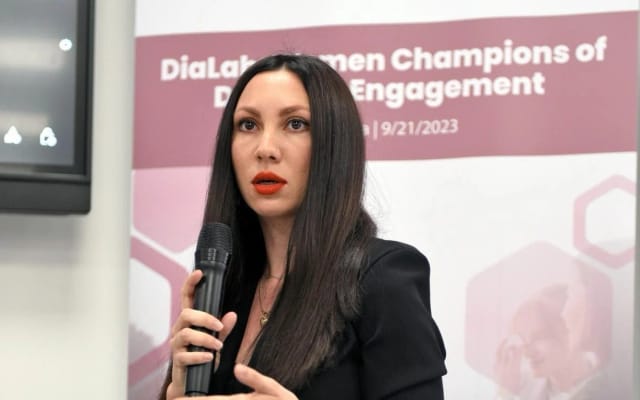
Žene donose svježe ideje na tržišta: Pristup kapitalu
On how much harder it is for women entrepreneurs to access capital than for their male peers.
Biznis ONa projekat uspješno završen
From the training for thirty women entrepreneurs in Banja Luka, where Atika was a guest.

Najveća promjena koja mi se desila je promjena u pogledu na vrijeme
A personal interview about time, family and the lines work does not get to cross.
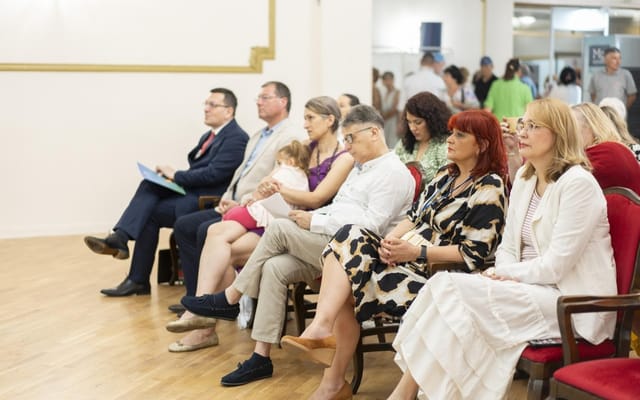
Galerija: Jubilarni 30. Festival zdravlja u Beogradu
Atika at the jubilee edition of the region's oldest health festival.