
Your cart is currently empty.
Browse productsPaediatric protocols
Celiac disease in children. Gluten-free, without deficiencies.
Protocol duration: 12 weeksWhen a child is diagnosed with celiac disease, the parent gets one sentence: no gluten, for life. Then comes reading labels, fearing every crumb at kindergarten and wondering what the child can eat for a snack at all.
A gluten-free diet isn't automatically healthy. Ready-made gluten-free products often have more sugar and fat and less fibre, iron and B vitamins, so children on them easily gain weight or miss out on important nutrients. That's why, over 10 years of work with patients, we've developed gluten-free menus that are varied, filling and complete.
First pillar: medicine"Just cut out gluten."
"Just cut out gluten."
It's not enough.
Celiac disease is an autoimmune disease: in a child, gluten damages the lining of the small intestine, so nutrients are absorbed less well. That's why tiredness, slower growth and digestive problems are common in children with celiac disease, both before and after the diagnosis.
The lining only recovers once the diet is consistently gluten-free, and that usually takes months. So the diet has to be safe, but also rich in what the body has been missing for a long time, with attention to hidden gluten in spices, sausages and ready-made sauces.




Coming soon
Meet the team for the 2026/2027 season
Second pillar: dieteticsA menu your child
Three cyclesA menu your child
will actually eat.
Picture a blank sheet. That's what your child's program looks like on the day it's made. Then the team sits down and, based on the history, lab results, age and goals, food by food, meal by meal, puts together a protocol that leaves nothing to chance.
Your child won't eat fish? We find another source of omega 3 fats. Takes a snack to school? We choose meals that pack easily and keep until break time. Has training after school? We fit meals around the schedule. Eats lunch at kindergarten? We put the other meals together so they complement what they eat there. Our focus is sustainability in real life, not theoretical perfection.
Internal statistics: children whose parents eat the same meals from the menu stay consistent with the regime as much as 10 times more often.
Every24h
You log your child's meals in the app. The team sees every entry.
Every7days
A check-in measurement of your child. If something isn't going to plan, we change it.
Every14days
Seven new menus, so your child doesn't get bored.
Third pillar: supportA birthday, grandma, a school snack.
A birthday, grandma, a school snack.
Ask the council.
Sooner or later every parent ends up in the same situations: a birthday at kindergarten, a grandma handing out sweets, a snack at school, a child who refuses everything but pasta. For all of that, you write to the council through the app.
The truth is that a birthday can go gluten-free too, without the child feeling left out. So let us know in advance where your child is going, and we'll suggest what to bring and how to fit in the rest of that day's meals.
The app
An app that remembers for you.
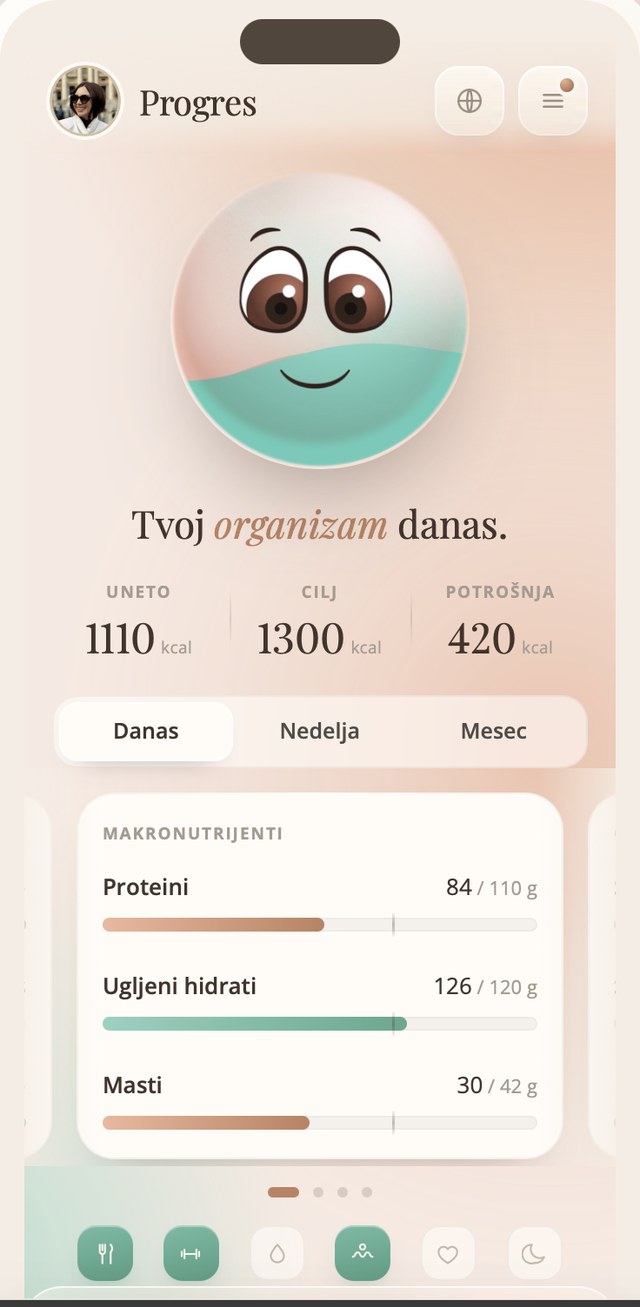
- tracks appetite and type of hunger during the day
- a map of habits that slow down results
- getting back on track after a slip
- explains what each meal does for the body
- links jumps on the scale to sleep and symptoms
- challenges and rewards for good habits
MethodologyWhy exactly
Why exactly
12 weeks?
Phase 1, weeks 1 to 4. The council starts from the lab results and the initial analysis. In it you enter your child's habits, the family's rhythm (kindergarten or school, training, who cooks and when) and the foods that fit your budget. From that, a menu is made for your child's needs, from naturally gluten-free foods. For every dish in the app you can choose how many people you're cooking for, 3, 4 or 5, and get recalculated ingredient amounts, so the whole family can eat the same meal. What you see: calmer digestion, less bloating.
Phase 2, weeks 5 to 8. Every 14 days seven new menus arrive, based on the measurements and entries in the app. We gradually introduce new gluten-free grains, such as buckwheat, millet and quinoa, and adapt snacks for school and kindergarten so they're safe away from home. What you see: more energy, a better appetite, more varied snacks.
Phase 3, weeks 9 to 12. The focus is on the child and the family recognising hidden gluten on their own and putting together a safe meal away from home too. If the doctor asks for it, you do follow-up lab tests and we compare them with the starting ones. What you see: steady energy and a child who knows on their own what they can eat.
Fifteen years without marketing. Our patients do the talking.
Two ways to start.
Online program for every country4 weeks · 3 installments of 120 €
120 €
Medical protocol · nutrition therapy and mentoring
- Monthly intake review the council analyses the child's lab results, records, habits and needs
- Medical nutrition therapy 14 menus based on age and lab results (2 × 7 menus)
- Supplementation (optional) age-appropriate supplement recommendations (vitamin D, omega 3…)
- Progress tracking check-in measurement of the child's waist and weight every 7 days
- Mentoring and consultations ask anything, with no appointments and no consultation fees
- Birthdays and outings we plan in advance what the child brings and eats away from home
Atika app · included with the protocol, at no extra cost
- Portions for the whole family recalculate every dish for 3, 4 or 5 people
- Appetite tracking logs the intensity and type of the child's hunger during the day
- Behaviour pattern map a report on the habits that slow down results, every 14 days
- Getting back on track after a slip steps for returning to the regime after a deviation from the plan
- Nutrition education with every entry, learn what the meal does for your child's body
- Challenges and rewards points and rewards that motivate the child to keep going
Online program for every country12 weeks · complete protocol
270 €Save 90 €
Medical protocol · nutrition therapy and mentoring
- Monthly intake review the council analyses the child's lab results, records, habits and needs
- Medical nutrition therapy 42 menus based on age and lab results (6 × 7 menus)
- Supplementation (optional) age-appropriate supplement recommendations (vitamin D, omega 3…)
- Progress tracking check-in measurement of the child's waist and weight every 7 days
- Mentoring and consultations ask anything, with no appointments and no consultation fees
- Birthdays and outings we plan in advance what the child brings and eats away from home
Atika app · included with the protocol, at no extra cost
- Portions for the whole family recalculate every dish for 3, 4 or 5 people
- Appetite tracking logs the intensity and type of the child's hunger during the day
- Behaviour pattern map a report on the habits that slow down results, every 14 days
- Getting back on track after a slip steps for returning to the regime after a deviation from the plan
- Nutrition education with every entry, learn what the meal does for your child's body
- Challenges and rewards points and rewards that motivate the child to keep going
Not sure yet?
Book a free consultation.
We understand parents' caution, because it isn't easy to entrust your child's health to someone else. That's why the consultation lasts as long as it needs to. You can ask as many questions as you like, to understand what the protocol looks like day to day and what's expected of your child and of you.
So we ask you to have a free consultation before you buy, to find out whether we're a good match.
* The number of patients we take on each month is limited, so everyone gets the council's full attention. Book your slot in time.
Frequently asked questions
Yes. Each month works on a different part of the problem, and a child's habits and stable changes in the body take at least 12 weeks of continuity. When the protocol is stopped early, the child usually goes back to old habits, and the symptoms come back with them.
There's no need to choose, because the team doesn't work by the program's name but by the child's lab results and medical history. Every parameter, diagnosis, therapy and even hereditary predisposition to certain diseases (e.g. a family history of diabetes) is taken into account before the protocol is made.
Lab results are required, because without them we don't know how serious the situation is or which direction to work in. We don't ask for anything complicated: a complete blood count, and depending on the child's condition the doctor may ask for a few more parameters.
No. Diet, sleep and physical activity strengthen the child's whole body, but the protocol doesn't replace the pediatrician or the therapy they prescribed. We are strongly against charlatan promises and claims that something cures every disease.
It depends on the dish. Children often come to us precisely because their diet isn't varied, so part of the job is gradually widening the list of foods. A child sometimes needs around ten tries to accept a new food. If the dish isn't key to the result, the council replaces it with another one.
Access lasts as many weeks as you paid for, after which the platform locks automatically. You can extend the collaboration by paying for a new protocol.